

So, slightly later than planned: here is my films reviews from the first four months of 2025.
2025 has been a middling year for cinema so far. While the following four films have been outstanding, the shorter reviews show issues with over-indulgence, poor execution or just plain ‘trying too hard’. I’m hoping that the year’s summer and fall releases will be far more intriguing, affecting and, frankly, entertaining.
Here’s my 4 top films of the year (so far):
A REAL PAIN: Eisenberg and Culkin Hit the Road in Poignant Post-Holocaust Dramedy.
Director: Jesse Eisenberg / Screenplay: Jesse Eisenberg.
What is the ‘real pain’ of this second film from writer, director and leading actor Jesse Eisenberg? Is it the shared personal loss in the lives of his leading duo? Might it be the magnitude of the Nazi Holocaust that casts a shadow over the film’s Poland backdrop? Or is it the unpredictable behaviour of Kieran Culkin’s scene-stealing character? The ‘real pain’ of A Real Pain might be all of these at once. In doing so, Eisenberg creates a sweet yet daring dramedy that tries to probe the purpose of remembrance.
Daniel (Eisenberg) and Benji (Culkin), two millennial Jewish American cousins, embark on a Holocaust-oriented tour of Poland to see their family’s roots and fulfil the wish of their recently deceased grandmother by revisiting her childhood home. But time and distance has changed both the personalities and relationship of the two cousins. High-achiever Daniel is uptight and anxious, while carefree Benji approaches everything with a soulful, frenetic energy that, at times, barely masks sudden episodes of stress. As they journey through the country, Daniel and Benji encounter their family’s traumatic past while coming to terms with their own recent estrangement. It’s a trip that neither is likely to forget.
Considering the heaviness of the background subject matter, Eisenberg is brave at poking satirically into the thorny issues of both historical and personal trauma. It’s striking how often people focus on large-scale, historical tragedies to avoid dealing with the more personal, everyday pain they might be able to change. At times, the drama airs these conundrums openly in the dialogue, but it is also found in the messy, unresolved resentments between the principal characters.
Eisenberg and Culkin create a believable, jostling tension between the otherwise chummy cousins. Eisenberg plays Daniel with a strained presence, marked by disappointment and resentment amid an understandable amount of exasperation at his cousin’s life choices and travel decisions (or lack thereof). He is complimented – and occasionally overshadowed – by Culkin, who delivers on Benji’s mercurial personality, insightful reflections and a deep unspoken sadness. He is both the breath of fresh air that can lift the movie or bring it crashing down to earth. Together the duo creates a chemistry that fully embodies a shared history, struggling against who they were and who they are now. It melds perfectly with the wider theme of past-present entanglement that Eisenberg stokes throughout.
I should also say it is very funny despite the weight of tragic history. Benji’s remarks punctuate certain moments with sharp inappropriate humour and Will Sharpe is perfect as the disarmingly chipper tour guide switching from heavy reflection to breeziness. A Real Pain is a real joy and intrigue to watch.
Where to Watch: A Real Pain can be watched on Disney + and Amazon Prime now.
My Verdict // ★★★★★
MARIA: Jolie’s Moving Lead Performance Shows How You Solve A Problem Like Maria Callas.
Director: Pablo Larraín / Screenplay: Steven Knight.
Director-writer Pablo Larraín’s recent work has blended biography and fantasy to roll back the icon status of his central subjects (Jackie Kennedy in 2016’s Jackie, Princess Diana in 2021’s Spencer and Augusto Pinochet in 2023’s El Condo). This latest work, based on the final week in the life of internationally renowned opera star Maria Callas, is no different. Raised by Angelina Jolie’s charismatic performance, Maria is a tender, haunting portrayal of the woman behind the prima donna assoluta.
Set in 1977, Maria is planning a comeback to the stage, previewed through an exclusive, intimate documentary by filmmaker Mandrax (Kodi Smitt-McPhee). However, she is temperamental, reclusive and caught regularly in drug-induced hallucinations that spiral her into past memories. Will she reclaim her former glory or is the curtain about to fall forever?
We all know the answer, but Steven Knight’s screenplay blurs not just Callas’ past and present, but also her public and private selves. Here, despite the inevitability, we are witness to the very strange and sentimental circumstances of Callas’ final days – a dramatic rendering of odd meetings and a desire to search for self-hood beyond the fame, music, love affairs and her tragic childhood. It is a journey for self-control against her drug-fuelled seclusion, which Larraín presents unsubtly through the cinematography: the uncanny recordings of the real Callas at the peak of her vocal powers; green lights drifting through the high windows into her smoky apartment; the abrupt shifts in aspect ratio and footage styles. All these Larraín employs to transport us into Maria’s gradual unmooring from reality.
Jolie captures Callas with poised grace, wry wit and an undercurrent of desperation. The sensitivity and humour in her performance draw sympathy, showing that beneath her aloofness, she retained a measure of self-regard (‘I come to restaurants to be adored’ she declares to a fussy waiter). Pierfrancesco Favino and Alba Rohrwacher as her ‘aides’ are too decent to be believed and are more of a stand-in for a forgiving audience. But, as with much of the film, it isn’t quite clear if they aren’t just figments of Maria’s overactive imagination.
While Larraín’s biographical movie of a falling female star shares the same touching approach with recent entries in the genre – such as Olivier Dahan’s 2007 biopic on Edith Piaf or Rupert Goold’s 2019 film on Judy Garland – he remains more thoughtfully probing of his subject. Perhaps it’s the kind of adoration that Maria would have approved of.
Where to Watch: Maria can be watched on Amazon Prime and Netflix now.
My Verdict // ★★★★☆
SEPTEMBER 5: Fehlbaum Rewinds the Tape on the 1972 Munich Massacre.
Director: Tim Fehlbaum / Screenplay: Moritz Binder, Tim Fehlbaum, Alex David.
In 1972, the world was transfixed by the unpredictable scenes playing out at the Olympics in Munich. When eleven Israeli athletes are taken hostage by the Palestinian terrorist group ‘Black September’, the American Broadcasting Company (ABC) sports news crew face a moral dilemma with a ticking clock: do they forego coverage of a major unfolding story or risk aiding the terrorists unwittingly by broadcasting it to the world?
This is a detailed, tense thriller from Tim Fehlbaum that explores the ethics of covering ongoing tragic events in real-time. As is emphasised through the drama, this was novel territory for mass media at the time and only to be eclipsed thirty years later by the 9/11 attacks in New York. The distance between our time and theirs is highlighted further by the period’s analogue intricacies: miles of cabling, developing film reels and the pushing of brightly lit buttons get a lot of screen-time. The grainy textures and over-bloomed lighting intercut seamlessly with the actual footage of this fateful day create an immerse, documentary-like atmosphere that pulls the viewer into the chaos.
The Cold War Era prejudices of the joint American and European crew are also explored briefly, with Leonie Benesch’s German translator performing the role of the German conscience for it’s post-Holocaust generation. The writers (Fehlbaum, Moritz Binder and Alex David) do not spare the self-righteousness and hubris of the time through the dialogue. It is brought to life by a convincingly grounded ensemble, especially John Magaro as the determined control room head Geoffrey Mason. Sweating profusely and responding constantly, Mason is pulled between the ambitious president Roone Arledge (a reliably ambiguous Peter Sarsgaard) and the more ethically minded Marvin (a natural performance of career-battered wisdom from Ben Chaplin).
While building with palpable tension and foreboding to its tragic conclusion, the drama only suffers at the end as we get closer to the inevitable. The film offers limited reflection on how the events were understood at the time or how they reverberated into the future (for this, viewers should see Steven Spielberg’s 2005 film Munich, which covers the covert Israeli response to the massacre). Fehlbaum’s dedication to historical fidelity doesn’t just recreate a day of horror – it revives the ethical weight still felt in live media today.
Where to Watch: September 5 can be watched on Amazon Prime and Apple TV+ now.
My Verdict // ★★★★☆
AINDA ESTOU AQUI (I’M STILL HERE): Salles’ Striking, Subtle Drama of Survival Under State Surveillance.
Director: Walter Salles / Screenplay: Murilo Hauser, Heitor Lorega – based on the 2015 autobiography of the same name by Marcelo Rubens Paiva.
Set during the military dictatorship of the 1970s, I’m Still Here begins by showing the middle-class Paiva family living an idyllic life by the sea in Rio De Janeiro. However, when a diplomat is disappeared by a revolutionary group, former dissident Rubens Paiva (Selton Mello) is arrested under suspicion. It is left to his wife Eunice (Fernanda Torres and played as an older version by the actor’s mother and Brazilian grande dame Fernanda Montengro) to take care of the children in his absence. Fretting for his life, Eunice pursues the truth doggedly to discover where he has been taken. Such a mission will put her life, and that of her children, in danger.
Walter Salles’ biopic drama (based on the memoir of Marcelo Rubens Paiva, who is depicted in the film by Guilherme Silveira and Antonio Saboia) is a subtle, sensitive and, at times, deeply disturbing depiction of state surveillance. The early scenes of the film –nostalgic, sun-dappled footage from an old camera capturing blissful beach days and burgeoning teenage-hood- descend gradually into cold, stark-lit scenes of deep uncertainty and fear. Torres delivers a tour-de-force performance as Eunice, portraying her as steadfast in her search for her husband while believably guarded, careful not to attract attention or alarm her children.
Later scenes reveal that the children (Valentina Herszage, Luiza Kosovski, Barbara Luz and Cora Mora) were more perceptive than Eunice realised, though clinging to fragments of their lost innocence. The devolution of their family home from a place furnished tastefully and patronised by politicised friends to silence and emptiness is gradual and powerful when realised.
What resonates most is the understated portrayal of family life under constant threat. It is never heavy-handed and occasionally bordering on the mundane in a way that heightens the realism. However, the spirit of defiance and an unrelenting pursuit of truth and justice is I’m Still Here’s lasting impression.
Where to Watch: Ainda Estou Aqui (I’m Still Here) can be watched on Apple TV+ and Curzon Home Cinema now.
My Verdict // ★★★★☆
And here are some notable mentions from the year’s first quarter…

Nosferatu (Dir. Robert Eggers, Screenplay. Robert Eggers – based on F. W. Murnau’s 1922 silent film ‘Nosferatu: A Symphony of Horror’: Robert Eggers’ latest darkly atmospheric ‘mood’ piece reimagines F. W. Murnau (in)famous 1922 silent film that retells the story of Bram Stoker’s classic Gothic horror Dracula. After young Ellen (Lily-Rose Depp) marries aspiring estate agent Thomas (Nicholas Hoult), a malevolent presence that haunted her in puberty returns. The dread intensifies when Thomas travels to the Transylvanian castle of the mysterious Count Orlock (Bill Skarsgård). Soon, Ellen discovers she is in a battle with an ancient evil for not only her soul but all those she holds dear. Though Eggers is renowned for the intense moodiness and immersive cinematography of The Witch, The Lighthouse and The Northman, this adaptation feels overdone and, at times, unintentionally silly. Eggers attempts to deepen the original’s themes by layering nineteenth century anxieties about scientific rationalism, the occult and sexual repression. But the score, cinematography and certain performances make the film more hysterical than haunting. Skarsgård hovers around in the shadows with a stereotypical drawling accent as thick as the lighting. Willem Dafoe as the cranky, crackers Van Helsing stand-in is similarly hilarious, not to mention Depp’s overwrought mania as the whole situation devolves into hellishness (quite literally). Robin Carolan’s score overbears constantly and there’s a sense that Eggers is just trying too hard for his remake to be disturbing and edgy. Ultimately, Nosferatu isn’t provocative or petrifying but parodic. My Verdict // ★★☆☆☆
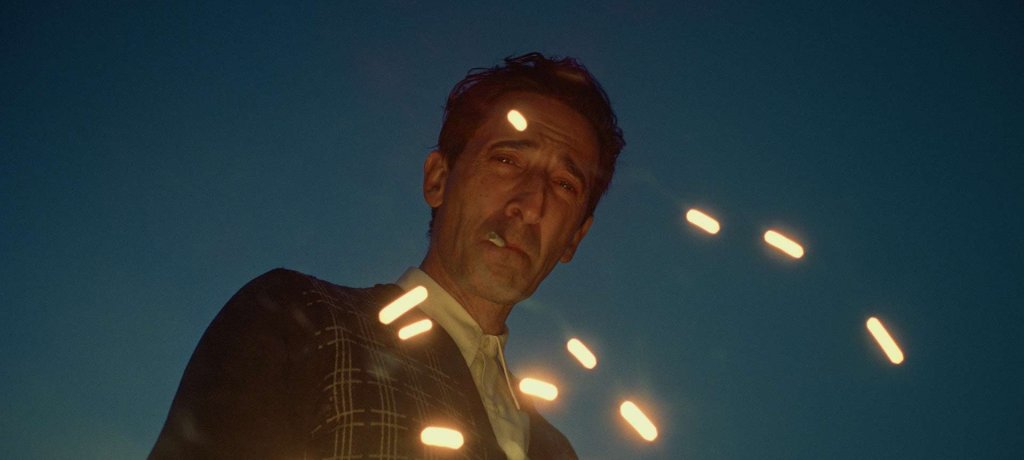
The Brutalist (Dir. Brady Corbet, Screenplay. Brady Corbet, Mona Fastvold): In the aftermath of the Second World War, Hungarian Jewish architect and Holocaust survivor László Tóth (Adrien Brody) travels to America to start a new life. Leaving behind his wife (Felicity Jones) and niece, Tóth is barely able to survive the deprivation and antisemitism that is rife in the country. When rich tycoon Harrison Van Buren (Guy Pearce) gives him an opportunity to use his talents and unique vision, this chance encounter changes his life. But will it heal the pain that remains from the war, the concentration camps and the hostilities in America? Director-writer Brady Corbet’s four-hour epic is a curious construction: novelistic, gritty, self-consciously artistic and ethereal. It hovers between a piercing depiction of post-Holocaust trauma that can be subtle and evocative yet, at times, feels overdone and belaboured, especially by the film’s ending. With cinematographer Lol Crawley’s sweeping vistas (often of monolithic architecture that linger portentously in the frame), fixation on its tortured genius figure, and the indulgent run-time, it sometimes feels like Corbet is angling for the same historical heft as Christopher Nolan’s Oppenheimer (2023). The ambition might be impressive – even if the execution buckles under its own weight. Brody, Jones and Pearce are gripping as the complexly layered characters, often betraying their pains, fantasies and prejudices. Yet beneath the film’s occasionally aggrandising tone, Corbet crafts moments that are genuinely haunting. My Verdict // ★★★☆☆

The Last Showgirl (Dir. Gia Coppola, Screenplay. Kate Gersten): Shelly (Pamela Anderson), a fifty-something Las Vegas showgirl, is reaching a tear in her life and career. After committing thirty years to the ‘Razzle Dazzle’ show, Shelly is facing its final curtain. As she struggles to contemplate her next step, her daughter Hannah (Billie Lourd) re-enters her life after a desperate phone call. Their acrimonious reunion forces Shelly to reckon with her life choices, sending her identity into a tailspin. Gia Coppola’s latest film is sweet but frustratingly underdeveloped. The sense of a life lived in a blur of unreality is evoked in hazy montages, the camera clinging to Anderson while she is backdropped by theatrical lights or the unappealing Las Vegas skyline. These wistful, evocative moments (guided by Andrew Wyatt’s melancholy score) cut hard against the emotive, verbose scenes that simply exposit to the audience. Kate Gersten’s dialogue and story feels rushed. The cast (Jamie Lee Curtis, Dave Bautista, Kiernan Shipka, Brenda Song) get brief, impactful moments as the misérables of the Vegas service industry, but the story ends up wasting them. Anderson wins you over as a woman determined to live in her self-delusion and infantilisation – who only sees the nostalgia and magic in her career- but the characterisation remains very flat. The Last Showgirl offers only a feather-light touch of misery rather than possessing genuine emotional weight. My Verdict // ★★☆☆☆

Mickey 17 (Dir. Bong Joon Ho, Screenplay. Bong Joon Ho – based on the 2022 novel ‘Mickey7’ by Edward Ashton): It’s 2054: humanity has abandoned Earth and are heading for the stars. A perpetually downtrodden and brow-beaten Robert Pattinson plays Mickey Barnes, a man who gets caught up in a foiled scheme and is forced to pay off the debt by becoming an off world ‘expendable’. Biologically engineered to be endlessly reprinted, Mickey is subject to all manner of dangerous missions and lethal testing. When his seventeenth reprint is left for dead on a frozen planet, he’s determined to survive to return to his lover Nasha (Naomi Ackie). But he’s about to meet his eighteenth version (for some unexplained reason, a more belligerent Pattinson) and a whole heap of trouble. Bong Joon Ho returns to similar themes of class struggle, disposability and identity issues from his recent work (Snowpiercer, Okja and Parasite) in this often strange, off-beat, sci-fi satire. Unfortunately, much of the political satire feels familiar and tired, echoing tropes that have already been heavily mined in recent years. Mark Ruffalo’s madcap trillionaire (lovechild of Elon Musk and Donald Trump in some alternate reality) is a barely veiled impersonation that we’ve seen before (such as Meryl Streep’s unsubtle President in 2021’s Don’t Look Up). The thematic tension between the frozen planet’s native population and the human colonists seems derivative of Starship Troopers (1997), merely updated for our (media-obsessive) times. When odd jokes and obvious riffs fail, Bong is left to deliver the political message didactically to his audience (such as a righteous speech delivered with fiery conviction by Ackie). Despite Pattinson’s effective double-act as the two clones, his perversely cheery scientist handlers, and the sly farce in this future vision, it never quite reaches the heights of Bong’s previous films. My Verdict // ★★★☆☆
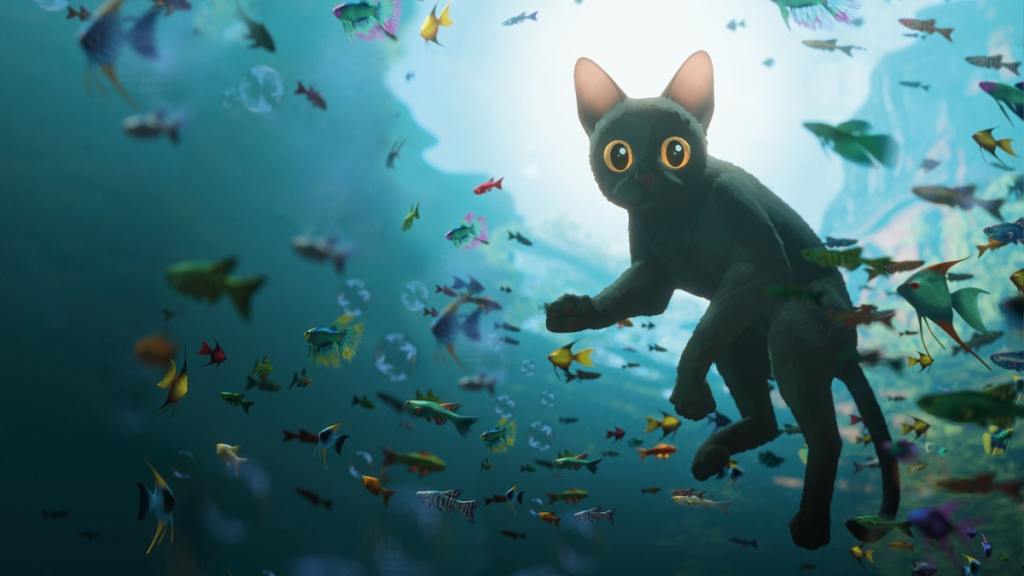
Straume (Flow) (Dir. Gints Zilbalodis, Screenplay. Gints Zilbalodis, Matīss Kaža): In a world long abandoned by humans, a lone dark grey cat watches as rising waters slowly drown its forest paradise. As the rivers overflow and consume all beneath the waterline, the cat struggles to find higher ground. Only a boat commandeered by a friendly capybara offers hope and an odyssey across a world transformed. Following his visually impressive but emotionally muted Away (2019), Gints Zilbalodis returns with a far more assured and affecting feature. While the film shares its predecessor’s atmospheric score, sweeping vistas and absence of dialogue, the studied animatic movements and relations between the animals are impressively life-like. The animals exude personality without ever becoming fully anthropomorphised. Zilbalodis’ framing follows the cat’s tumbling movements with precision, drawing us into its delicate struggle. While the cat appears to be overcoming a fear of water, this narrative arc isn’t always clear and the mysterious circumstances remain vague to the end. But, for Flow’s awe-inspiring and gentle ambience, this is certainly an improvement. My Verdict // ★★★☆☆

The End (Dir. Joshua Oppenheimer, Screenplay. Joshua Oppenheimer, Rasmus Heisterberg): The popular adage goes that it ain’t over until the fat lady sings. Well, there’s no fat lady in Joshua Oppenheimer’s absurdist musical, but there’s plenty of off-beat choruses about the apocalypse. Though mankind has been decimated by a (presumably nuclear) disaster, a small cohort survive in an underground bunker. They fill their days with eccentric hobbies, part of a desperate attempt to maintain routine. George McKay plays the son of the only couple in the compound (Tilda Swinton and Michael Shannon) who longs to know the world beyond the salt mine. When a stranger (Moses Ingram) manages to find her way inside, the family must break or uphold the rules of their isolation. Oppenheimer’s bizarre film plays with the overwhelming, perturbing, quiet horror at the end of the world, while also sending up the musical genre. Musical solos traditionally express inner emotions on a grand scale – but what happens when there’s nothing left to feel, let along sing about? The Sondheim-like melodies are ultimately forgettable, even veering into tedium by the end. But they do make for an interesting juxtaposition of a world starved of life and meaning. The slow unravelling of the bunker group (including Tim McInnery, Bronagh Gallagher and Lennie James) is more intriguing when they are forced to confront the comforting lies told about their past. The End chips away at its theme – what it feels like to endure extinction and what we cling to in its wake – but the lingering thought becomes: ‘when is it finally going to be over?’ As mentioned, no fat lady is forthcoming, unfortunately. My Verdict // ★★★☆☆

![4 EYES ON THE SCREEN: 4 More Top Films from 2025 [MAY-AUGUST] [Review] – 4 EYES ON THE SCREEN + EVEN MORE EYES: a cinema blog & podcast Avatar](https://4eyesonthescreen.com/wp-content/uploads/2025/06/cropped-cropped-df042c00-9362-4263-8604-aa3fb9311281-1.png?w=40)
 4 EYES ON THE SCREEN + EVEN MORE EYES: a cinema blog & podcast