

A little later than planned but here is my review round-up of the last quarter from 2025 and my Top 10 Films of the Year.
For those looking for my reviews from the first part of 2025, it’s here.
And the second quarter is here.
By the mid-point this year I was a little depressed about the state of cinema. After a relatively strong start, we seemed to distinct period of ‘meh’ (neither stinkingly bad, although Jurassic World: Rebirth was doing its best, nor amazingly good either). Fortunately, the autumn and winter have brought some fantastic new films (especially flying the flag for queer cinema) and some decent sequels.
For the second year running, there are no one stars. An improvement over years past…or I’m mellowing.
MY TOP 10 FILMS OF 2025 (in no particular order):
- A REAL PAIN
- MARIA
- AINDA ESTOU ACQUI (I’M STILL HERE)
- SINNERS
- YOUNG HEARTS
- PLAINCLOTHES
- HAPPYEND
- BUGONIA
- PILLION
- WICKED: FOR GOOD
To pause for a moment on my top choices this year, I’ve noticed there are some common threads between them. If last year’s films spoke to me on the theme of self-reinvention, my top ten this year seem to be (in one way or another) about the self under different forms of pressure. In certain movies, such as Young Hearts, A Real Pain and Maria, the forces that scrutinise and enclose our protagonists are more nebulous and personal. They often concern how the past casts shadows and how the future seems frightening. Other films are more explicit, typically revolving around the state trying to limit or even destroy our heroes and heroines. From Fernanda Torres’ harassed dissident family in I’m Still Here, to HAPPYEND’s surveilled teens, to even the two witches of Oz in Wicked: For Good, the role of authoritarian government in trying to fracture and force identities could not be clearer – and resistance can seem futile. While some of the breezier entries on this list offer (bitter)sweet conclusions, or even the blood-soaked revolt of Sinners‘ band of survivors, other films like Bugonia and Plainclothes suggest that trying to confront difficult can lead to further spirals of confusion and despair.
But there is another sentiment that emerges as a foundation. It comes from Harry Melling’s Colin, the lovably awkward lead character of Pillion. He remarks that while he has an ‘aptitude for devotion’, he learns that some limits ‘are not up for debate’. He comes to embody the Greek maxim ‘know thyself‘, a notion that carries itself across many of the protagonists here. Whether putting limits on sexual relations, standing up to the propagandised masses, or coming out for the first time, ‘knowing thyself’ can boundary us from the battery of delusions, falsehoods, seductions, confusions, and brutalities that characterise our world.
This is what I found at the cinema in 2025.
In any case, here are my final extended reviews of the top films between October and December.
HAPPYEND: Sora’s Dystopian Movie Surveys the Fragile Realities of Youth.
Director: Neo Sora / Screenplay: Neo Sora
Set in a near-future Tokyo, a group of high-schoolers stand on the verge of graduation. A final prank on the school principal leads to an unexpected crackdown on the student body: an overreaching surveillance system installed to monitor every aspect of their behaviour. As their society grows more precarious, over-policed, and xenophobic, close friends Yuta (Hayato Kurihara) and Kou (Yukito Hayashi) find themselves at a crossroads – to fight back or accept defeat for the sake of their personal futures.
While Neo Sora’s film can feel familiar within the dystopian genre – with its omniscient cameras that identify, label and penalise their subjects – the director-writer seems more concerned about perennial issues of youth, change and purpose. At times, the Orwellian surveillance story and rising political temperature (often exposited in slightly surreal ‘news-cloud’ broadcasts) are very much the backdrop to the personal and social crises of its young characters. Sora’s interests are ultimately more existential, reflecting on the inevitable collision between adolescence and the adult world, and the uncertain directions these fledgling youth might take.
Rather than embracing pure bleakness, Nora imbues his film with an endearing, almost wistful, energy and keeps his focus on the hijinks and heartfelt struggles of the students. The approach recalls the balanced filmmaking of Hirokazu Kore-eda, with its attentiveness to both political realities and intimate character development. The young ensemble are uniformly strong, capturing the humour and humanity of nascent adulthood, led by the convincingly contrasted performances of Kurihara and Hayashi.
It would be incorrect to describe Sora’s film as prescient. Increasingly, these issues already shape our daily lives– from intensifying anti-immigrant sentiment to pervasive intelligence and data-gathering intrusion – and, unlike Sora’s ultimately optimistic vision, they appear ever harder to resist and overcome. Even so, HAPPYEND remains undeniably beguiling, offering an unexpectedly tender portrait of youth’s fragile reality.
HAPPYEND is available to watch now on Curzon Home Video and Amazon Prime Video.
My Verdict // ★★★★☆
PLAINCLOTHES: A Palpable Thriller of Hypervigilance and Denied Desire.
Director: Carmen Emmi / Screenplay: Carmen Emmi
Amid a 1990’s moral panic about homosexuality, New York undercover police officer Lucas (Tom Blyth) is tasked with entrapping suspected gay men in a shopping mall restroom. Increasingly uneasy and unable to reconcile himself with the work assigned to him, the young cop begins to unravel. When he chooses to deliberately botch the entrapment of the mysterious Andrew (Russell Tovey), it triggers a crisis that will dismantle his career- and his life- in unexpected ways. Yet amid the turmoil, the question remains: will Lucas finally find the freedom he yearns for?
This is an intense, intimate, grinding drama-thriller from director-writer Carmen Emmi. The film’s cinematography and sound seize the viewer immediately, immersing us in a boxed-in world of suspicion, surveillance and a life agitated by gnawing doubts and constant wariness. Plainclothes is as much about gaze as gays, staging a conflict between organic, suggestive glances against the technological, incriminating eye of the state. To this end, Emmi constructs a disorientating fusion of crackling white noise, surveillance imagery, and fractured camera styles, jolting backwards and forwards across desperate periods of Lucas’ life.
Blyth is exceptional in the lead role, convincingly portraying a tough working-class man slowly collapsing inward, and delivering palpable moments of confusion, regret and longing. It’s an unsentimental performance within an unsentimental narrative, never allowing the furtive encounters with Andrew – played by Tovey as a calm, controlled and emotionally constrained foil- to become fully hopeful. Emmi also toys with irony as well, embedding a knowingness in the film’s lingering focus and fragmented dialogue that gestures not only towards Lucas’ deprivation, but perhaps that of others as well.
Plainclothes twists with assurance as it moves towards an unavoidable climax, offering a clever, well-earned resolution that cements the film as tightly plotted and emotionally attuned. Tonally, it can be tumultuous– from fiery and passionate to wintry and numbing – but it never fails to remain cinematically arresting.
Where to Watch: Plainclothes is available to watch now on Curzon Home Video.
My Verdict // ★★★★★
WICKED – FOR GOOD: Chu’s Act Two Is A Resolution That Deserves To Go Unpunished.
Director: Jon M. Chu / Screenplay: Winnie Holzman, Dana Fox – based on the 2003 Broadway musical inspired by the 1995 novel of the same name by Gregory Maguire.
After Wicked (Part One) defied box office gravity last year, director Jon M. Chu’s adaptation of the musical’s second half arrives on a bubble of inflated expectation. While this sequel doesn’t quite conjure the almost pitch-perfect powerhouse of its predecessor, it largely lands with considerable verve and grace.
A year on from their tumultuous parting in the Emerald City, Elphaba (Cynthia Erivo) and Glinda (Ariana Grande) are on opposing sides of a changing Oz – one now marked by enslaved Animals and pervasive propaganda. While the duplicitous Madam Morrible (Michelle Yeoh) maligns the fugitive Elphaba as ‘The Wicked Witch of the West’, Glinda ‘the Good’ is living the high life as a bejewelled, hyper-accessorised spokesperson for the Wizard (Jeff Goldblum). As more of Elphaba’s former allies turn against her – from sister Nessa Rose (Marissa Bode) to formerly carefree beau, now strained enforcer, Fiyero (Jonathan Bailey)- she grows increasingly desperate to save her home. By degrees, Elphaba is forced toward an inescapable confrontation with Glinda and the Wizard: will she abandon her struggle, or fully become the infamous ‘Wicked Witch’?
Adapting the musical’s shorter, scrappier second half was always going to be a challenge, and Chu manages it admirably. The extensions he and screenwriter’s Winnie Holzman and Dana Fox introduce are mostly for the good: expanding Elphaba’s motivations for remaining in Oz and paralleling her arc with a more developed Glinda are both necessary and poignant. However, when Dorothy drops into the mix and the film begins actively weaving Wicked with The Wizard of Oz the narrative inevitably falters. How this farm girl, dog in tow, truly brings an end to Elphaba’s crusade remains unconvincing. As in the stage version, these moments feel undercooked and underwhelming, offering less-than-satisfying conclusions for several character arcs. If there is one misstep to lay at Chu’s feet, it is his decision to leave these scenes mired in narrative muddle.
Fortunately, Erivo and Grande return on superb form. Their performances are more mature, befitting the sequel’s heavier emotional gravity. While still embracing humour, Grande reveals Glinda’s mounting self-doubt and introspection, particularly in the new song ‘The Girl in the Bubble’. This number, along with Elphaba’s new solo ‘No Place Like Home’ from composer Stephen Schwartz, is narratively welcome, even if both occasionally feel too on the nose. Elsewhere, the supporting cast enjoy standout moments – not always for the best reasons. Ethan Slater’s unfortunate Munchkin Boq and Michelle Yeoh’s vocal contributions prove slightly alarming. As for Goldblum, his familiar off-screen persona shines through, as if he has decided that the ‘Wizard is I’.
There’s less bittersweetness to the conclusion than in the stage version, but the final duet is both earned and wonderful. Chu has been well served by his casting (especially his leads), and his evident commitment to this story has brought Wicked from the stage to the screen with genuine passion. For this alone, any bad deeds committed in the making of this much-anticipated sequel deserve to go unpunished.
Where to Watch: Wicked- For Good is available to watch on Amazon Prime Video.
My Verdict // ★★★★☆
PILLION: Melling and Skarsgård Dominate in Unflinchingly Direct British Romance.
Director: Harry Lighton / Screenplay: Harry Lighton – based on the 2020 novel ‘Box Hill’ by Adam Mars Jones.
Even within the growing and increasingly confident field of queer cinema, the BDSM subculture has received little sustained, serious attention. Enter Pillion, director Harry Lighton’s adaptation of Adam Mars Jones’ 2020 novel Box Hill. A startling debut, the film notable not only for the sobriety with which it approaches its subject matter, but for an unflinching directness in both its literal and emotional exposure.
Young Colin (Harry Melling) lives a timid, carefully circumscribed life: a menial job as a parking attendant; still living at home with his parents (Lesley Sharp, Douglas Hodge); and the occasional barber-shop quartet performance at his local pub. When he is unexpectedly approached by Ray (Alexander Skarsgård), a strange, handsome, statuesque biker, for a sexual encounter, Colin is drawn into Ray’s dom-sub lifestyle. His ‘aptitude for devotion’ is soon tested, however, as he grows closer to his dominant, emotionally impenetrable partner. As the relationship strains – both internally and under the watchful concern of Colin’s family- he begins to question what he truly desires.
For a debut, this is challenging material. There is, certainly, an awkwardly British strain of humour threaded through many of the scenes, often drawn from social discomfort or deflection. Yet, the prevailing coldness of Lighton’s depiction of Colin and Ray’s relationship strips away any easy romanticisation of their behaviour, at times edging uncomfortably close to what resembles consensual abuse. The reality of the dynamic is laid bare: what it demands, what it withholds, and what it offers to both participants. Crucially, the film refuses to judge, allowing us to inhabit Colin’s interiority through Mellings’ quiet, flatly unassuming narration.
Unsurprisingly, the lead pair dominate here. Melling charts Colin’s gradual movement from timidity toward self-empowerment with a believability that unfolds by degrees, remaining lovable throughout. Skarsgård, meanwhile, is a hulking, icy presence- unapologetic in his dominance, and yet subtly suggestive of vulnerability and hurt, especially as the film approaches its denouement. Sharp and Hodge also impress as Colin’s supportive parents, striking a careful balance between gentle humour and withering caution.
Despite the film’s frank, undiverted depiction of dom-sub sex routines and rituals it is Pillion’s emotional dynamics – its negotiation of boundaries, insecurity, and self-worth – that ultimately come to the fore. Unexpectedly, the film’s hold is not visceral but deeply sensitive, and for all its starkness, its final insights speak to the necessity of self-discovery and regard.
Pillion is will be available to watch soon.
My Verdict // ★★★★★
And, finally, some short reviews of the last few films I saw this year, many of which are now available on a number of streaming services…
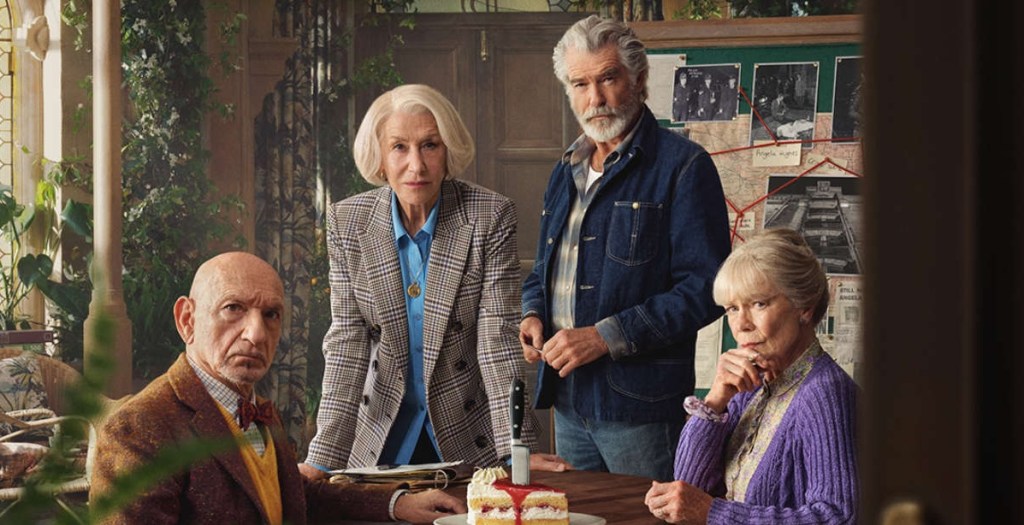
The Thursday Murder Club (Dir. Chris Columbus, Screenplay. Katy Brand, Suzanne Heathcote – based on the 2020 novel of the same name by Richard Osman): Richard Osman’s highly popular detective novels receive their inevitable big screen treatment in this lavish, star-studded adaptation from director Chris Columbus. Every Thursday at the palatial Cooper’s Chase retirement home, a group of amateur sleuths (Helen Mirren, Ben Kingsley, Pierce Brosnan and Celia Imrie) gather to crack cold cases. When a real murder happens and the unscrupulous owner (David Tennant) decides to sell Cooper’s Chase, the gang must gather to solve the crime and save their homes. This is a passable affair from Columbus: silly and nostalgic, but comedically uncertain. It is often unclear whether we are meant to be laughing with the film or at it. The cruder moments prove funnier- when Mirren and Imrie down canned gin on a bus or pass by a horny life drawing class – but these are few and far between. The rest is quite predictable and somewhat lazy, populated by a familiar rogues’ gallery of Cockney ne’er-do-wells and hapless police (including a gluttonous, paunchy Daniel Mays) set against the film’s self-righteous and comfortable senior citizens. The result is not quite the witty, mischievous slice of cinema it wants to be, but rather a deflated flan of a film. My Verdict // ★★☆☆☆

A Big Bold Beautiful Journey (Dir. Kogonada, Screenplay. Seth Reiss): David (Colin Farrell) and Sarah (Margot Robbie) are two lost souls struggling with the realities of being single in adulthood. They meet at a wedding – and decidedly do not hit it off. Soon after, however, they are soon matched together by a mysterious car rental company and set off on a journey together. As they engage with their pasts in increasingly surreal ways, the two learn a great deal about each other…and themselves. The result is a sweet but ponderous romance, buoyed by handsome cinematography, two stars that are easy on the eyes (with the notable exception of Farrell’s distracting beard); and a twinkling, familiar score from Studio Ghibli regular Joe Hisaishi. A somewhat Trumpian title hints at the rather simplistic, boosterish tone, though Kogonada and writer Seith Reiss attempt to navigate the more complex ways in which past experiences and personality shape our closest relationships and intimacies. For a journey, however, it doesn’t take you very far. My Verdict // ★★☆☆☆
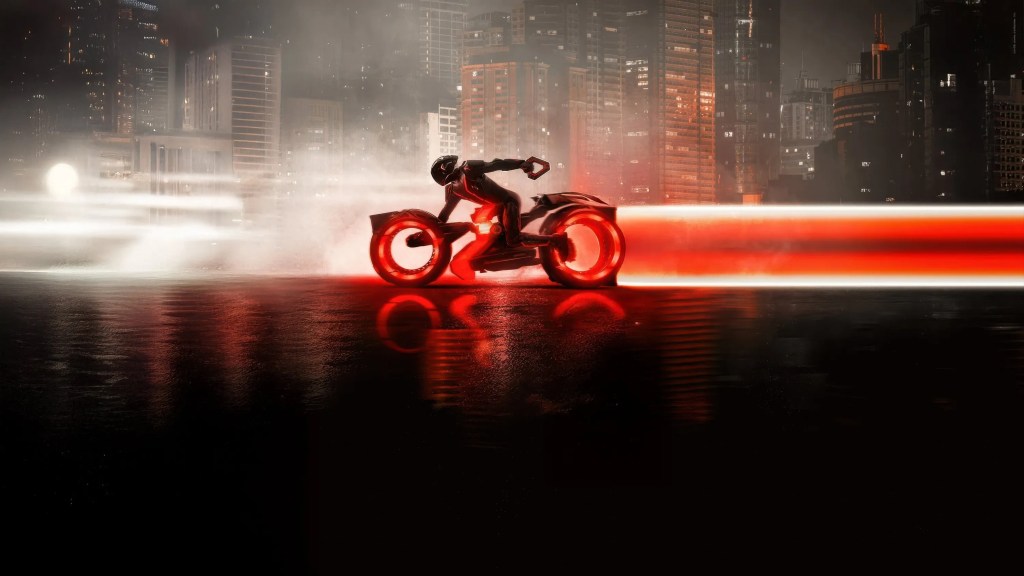
Tron: Ares (Dir. Joachim Rønning, Screenplay. Jesse Witugow): Set years after the 2010 sequel, Kevin Flynn’s (Jeff Bridges) legacy lives on through the Grid. But new frontiers beckon, as rival factions race to bring artificial intelligence into the real world – and have it survive beyond the system’s fatal 29-minute limit. Competing CEOs Dillinger (Evan Peters) and Eve Kim (Greta Lee) pursue the so-called ‘permanence code’ but for opposing ends: profit versus people. When Dillinger’s laser-printed enforcer Ares (Jared Leto) goes rogue, the real and digital worlds collide with catastrophic consequences. Will Eve escape death, and can Ares find a way to truly live? On a purely visual and sonic level, director Joachim Rønning’s follow-up is an electric spectacle, enhancing Tron: Legacy’s superb design and world-building- albeit with a moodier, more oppressive approach driven by an overbearing industrial score from Nine Inch Nails. Unfortunately, Ares is burdened with too many half-baked ideas and narrative contrivances to manufacture action and jeopardy, including a convenient amnesia towards its own central conceit of a 29-minute lifespan. The result is a scrambled mess, even as the film impressively weaves between real-world and Grid-based set-pieces. Leto’s stiff, affectless performance occasionally works in the context of an AI trying to learn empathy, though one can’t help wondering how much stronger the role might have been in more capable hands. With sequel teases already in place, Tron: Ares instead suggests it may be time for this franchise to finally power down.My Verdict // ★★☆☆☆
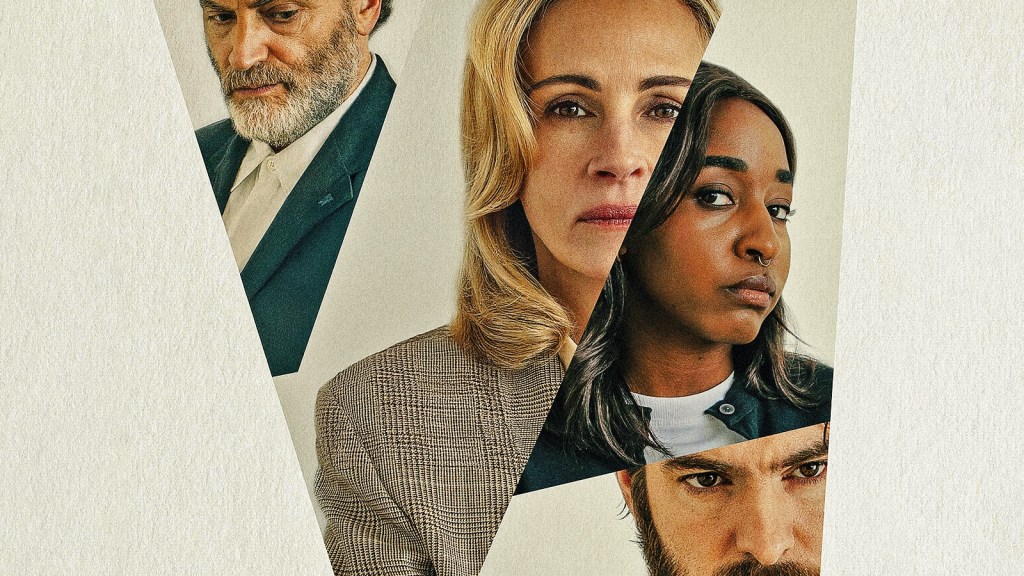
After the Hunt (Dir. Luca Guadagnino, Screenplay. Nora Garrett): Alma Imhoff (Julia Roberts), a philosophy professor at Yale, finds herself in a cordial rivalry with younger assistant professor Hank (Andrew Garfield) for tenure. After a party one night, she witnesses an ambiguous interaction between him and promising PhD student Maggie (Ayo Edebiri). Soon after, Maggie confides in Alma that she was sexually assaulted by Hank – a claim he vehemently denies. Caught between accuser and accused, Alma’s career, ethics, and relationships are pulled toward breaking point. Topical in its subject matter yet deeply cynical in its outlook, this feature debut script from Nora Garrett unfolds as an intense and slippery experience. It is elevated by director Luca Guadagnino characteristically immersive approach, fusing Trent Reznor and Atticus Ross’ spare, unsettling score with jolts of diegetic sound and an uncomfortably intimate frame. As the film progresses, the growing amorality of its characters becomes increasingly difficult to stomach, leaving the viewer to question its intent. Is it interrogating the danger and dance of accusation? The pitfalls of repression? The banality of virtue? Or simply suggesting that money, reputation, and job security are the only forces that truly matter? What might otherwise risk becoming a plodding academic exercise is instead brought vividly to life by the central trio, bolstered by an unpredictably sharp supporting turn from Michael Stuhlbarg. Roberts, in particular, is presented with cool restraint disguising emotional volatility, delivering a performance that ranks among the strongest of her career. My Verdict // ★★★☆☆
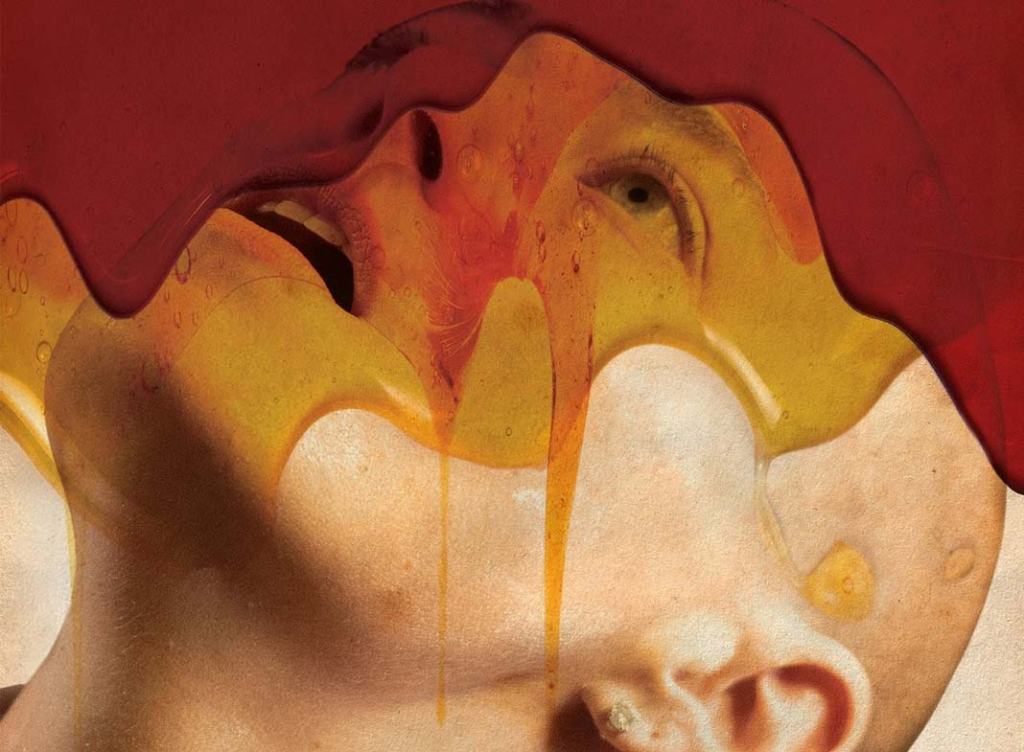
Bugonia (Dir. Yorgos Lanthimos, Screenplay: Will Tracy – based on the South Korean science-fiction film ‘지구를 지켜라!‘ (Save the Green Planet!) written and directed by Jang Joon-hwan): Yorgos Lanthimos’ characteristically odd sensibility proves fruitful once again in Bugonia. a conspiracy-tinged oddity set largely within a suburban homestead. Cousins Teddy and Dan (Jesse Plemons, Aidan Delbis) believe they are on the verge of saving the world. Fuelled by internet conspiracies, Teddy becomes convinced he has uncovered an alien race hiding in plain sight and decides kidnap one of its supposed members: his own coolly efficient corporate CEO (Emma Stone). With her held hostage, the cousins have only a few days to prove their theory – but the mother arrives or the police do. Unlike last year’s overindulgent Kinds of Kindness (2025), Lanthimos’ fascination with aberrant human behaviour keeps the audience guessing as to whether they might actually be onto something. Stone’s polished corporate-speak – inhumane and disarming– only deepens the suspicion. The film veers between the absurd, the gory, and the oddly sentimental, with Plemons and Delbis convincing as two isolated young men, spiralling to delusions and conflict. Stone, meanwhile, excels at cold, calculating crisis-management, her performance lending the film much of its tension and wit. The interplay between the trio is unpredictable, uneasy, and frequently funny. Still, there is an inescapable sense that the film is ready with a perfunctory twist. When it finally arrives, it doesn’t entirely cheapen Bugonia, but it offers little reason to revisit it. My Verdict // ★★★★☆
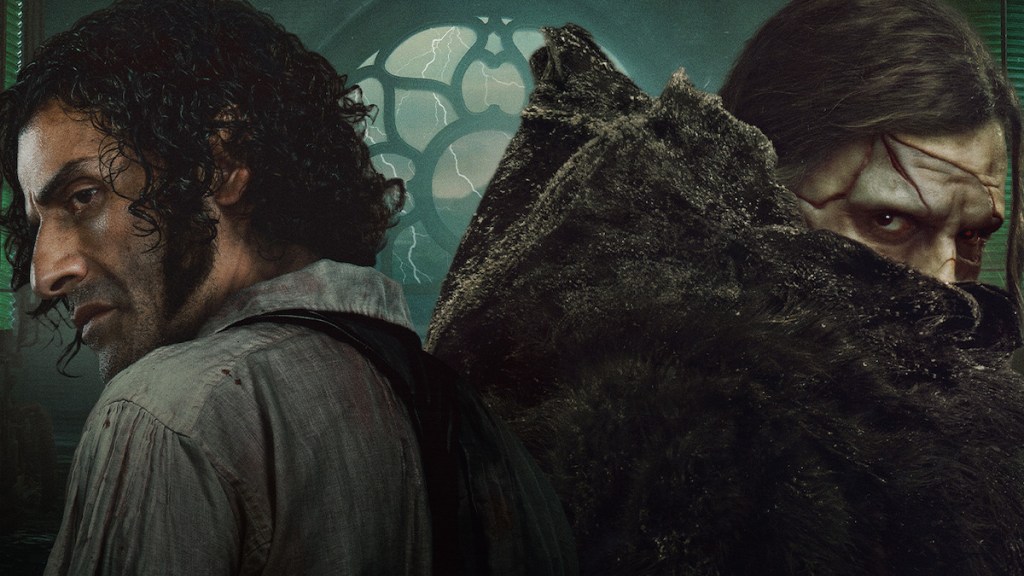
Frankenstein(Dir. Guillermo del Toro, Screenplay. Guillermo del Toro– based on the 1818 novel of the same name by Mary Shelley): Famed director Guillermo del Toro brings Mary Shelley’s unkillable novel back to the screen in this extremely lavish adaptation, complete with all his familiar cinematic hallmarks and indulgent eccentricities. When a ship bound for the North Pole becomes stranded on the ice, its crew discovers a mysterious man and a hulking man-shaped creature relentlessly hunting him. That man is Victor Frankenstein (Oscar Isaac), who recounts how he reanimated a corpse in a vainglorious attempt to inscribe himself upon the world. Yet the Creature (Jacob Elordi) has a story of his own – one that gradually reveals where true monstrosity lies. For all its excess– overdesigned sets, florid dialogue, and Mia Goth’s distinctly ‘Met Gala’ wardrobe- del Toro does succeed in capturing the core of Shelley’s tale: a meditation on hubris, responsibility, judgement and compassion, even if his version ultimately proves soppier than the novel. Both monster and man are compellingly realised, with Isaac’s vain, almost Byronic Victor matched by Elordi’s unexpectedly tender performance beneath layers of pale, fleshy prosthetics. The exchanges between creator and creation are the film’s most powerful moments, and they nearly make you forget del Toro’s overworked symbolism- and Goth’s alarming peacock hat. My Verdict// ★★★☆☆

یک تصادف ساده (It Was Just An Accident) (Dir. Jafar Panahi, Screenplay. Jafar Panahi): Set in contemporary Iran, a chance encounter spirals into something far darker when a man with a prosthetic leg (Ebrahim Azizi) is forced to take his damaged car to a nearby auto-mechanic. Vahid (Vahid Mobasseri), one of the workers, believes he recognises the distinctive sound of the man’s leg – and becomes convinced that he is one of his former torturers. Acting on this suspicion, Vahid kidnaps him, assembling a small group of others persecuted by the Iranian regime as they struggle to decide the man’s fate. Jafar Panahi’s latest black comedy is initially perplexing but gradually reveals itself as something far more compelling. As events become knotty and contested, the film is less interested in comedy than in mediation: on vigilante justice, moral certainty, and the fragile limits of forgiveness. Panahi’s delivers a variety of perspectives – some characters trapped in the grip of unresolved trauma, others yearning for release and repair- all rendered with a naturalistic restraint. The film’s flat blocking and static staging occasionally risk inducing tedium, but the emotional journey, particularly that of Mobasseri’s quietly amusing and unexpectedly touching Vahid, ultimately justifies the approach. My Verdict // ★★★☆☆
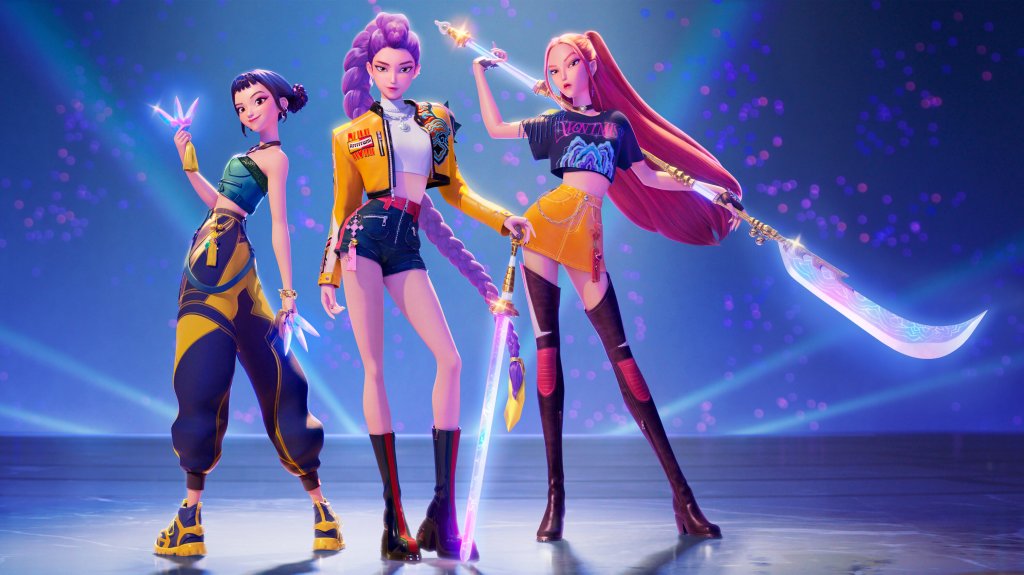
KPop Demon Hunters (Dir. Maggie Kang, Chris Appelhans, Screenplay. Danya Jimenez, Hannah McMechan, Maggie Kang, Chris Appelhans): In a world where musical performances and magical combat collide, the demon-hunter bad Huntrix reign supreme (voiced by Arden Cho, May Hong and Ji-young Yoo), driving evil from their realm through sheer talent and supernatural force. Facing the eradication of his dark dominion, the demon ruler Gwi-Ma (Lee Byung-hun) unleashes a rival act- the alluring band Saja Boys (led by Jinu, voiced by Ahn Hyo-seop)- in a bid to undermine Huntrix’s popularity and power. The ensuing clash reveals not only who will save the world, but long-buried secrets that the performers have been keeping from one another. Directed by Maggie Kang and Chris Appelhans, this highly successful animation project delivers some punchy, memorable songs and a handful of unexpected narrative twists, all wrapped in a sugar-rush pace and dazzling visual splendour. The fusion of contemporary sensibility, Korean mythology, and full-throttle K-Pop spectacle is confidently handled, resulting in a film that may be breezy and familiar, but certainly never fails to delight the eye or the ear. My Verdict // ★★★☆☆
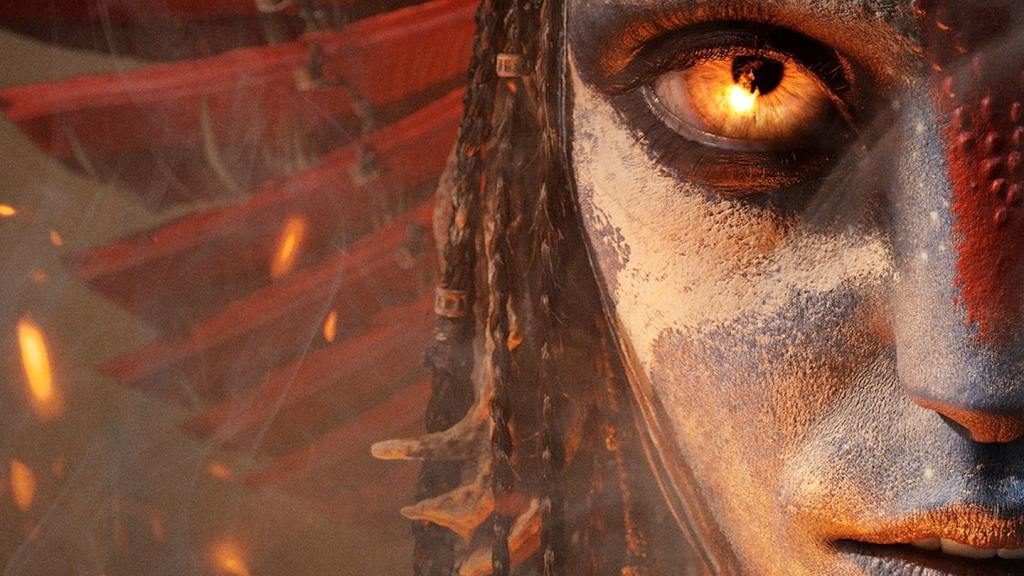
Avatar: Fire and Ash (Dir. James Cameron, Screenplay. James Cameron, Nick Jaffa, Amanda Silver): My Verdict James Cameron returns once more to Pandora, the ever-lush alien world where the blue-skinned, catlike Na’vi remain under constant threat from humankind.Following 2022’s The Way of Water, the Sully family are still reeling from the loss of beloved son Netayam, even as another assault by the military-industrial machine looms. Seeking to protect the vulnerable human teen ‘Spider’ (Jack Champion), who cannot breathe the Pandoran air, they journey across the planet in search of a safer refuge. Yet danger persists both without and within. Former human – now N’avi – commander Quaritch (Stephen Lang) resumes his relentless pursuit, this time allied with the vicious flying Ash Clan led by the menacing Varang (Oona Chaplin). Meanwhile, Neytiri (Zoe Saldaña), consumed by grief, blames ‘Spider’ for her son’s death, fracturing the once-united Sully front. As these pressures converge, we are once again told that more than the fate of one family – or even the planet – hangs in the balance. If this plot summary feels long, the film itself is three times longer. More frustratingly, for what now amounts to over nine hours of storytelling, Cameron’s space epic has travelled surprisingly little narrative distance since the 2009 original. Character arcs falter and circle back, often resolving exactly where they stood at the end of the previous sequel. The introduction of yet another new clan also feels less expansive than regressive. Unlike the aquatic culture introduced in The Way of Water, this new tribe is rendered as a one-note collective of sadists, seemingly presided over by a quasi-satanic leader whose portrayal edges uncomfortably into sexualised violence. As a franchise, Avatar increasingly feels stalled, unable to imagine conflicts beyond the obvious, and climaxing continually in bombastic set pieces of dizzying aerial combat and rampaging alien whales. For all its sweeping vistas and impeccably tuned special effects, Fire and Ash ultimately amounts to a visionless vision – spectacular to look at, but hollow to its core. // ★★☆☆☆

 4 EYES ON THE SCREEN + EVEN MORE EYES: a cinema blog & podcast